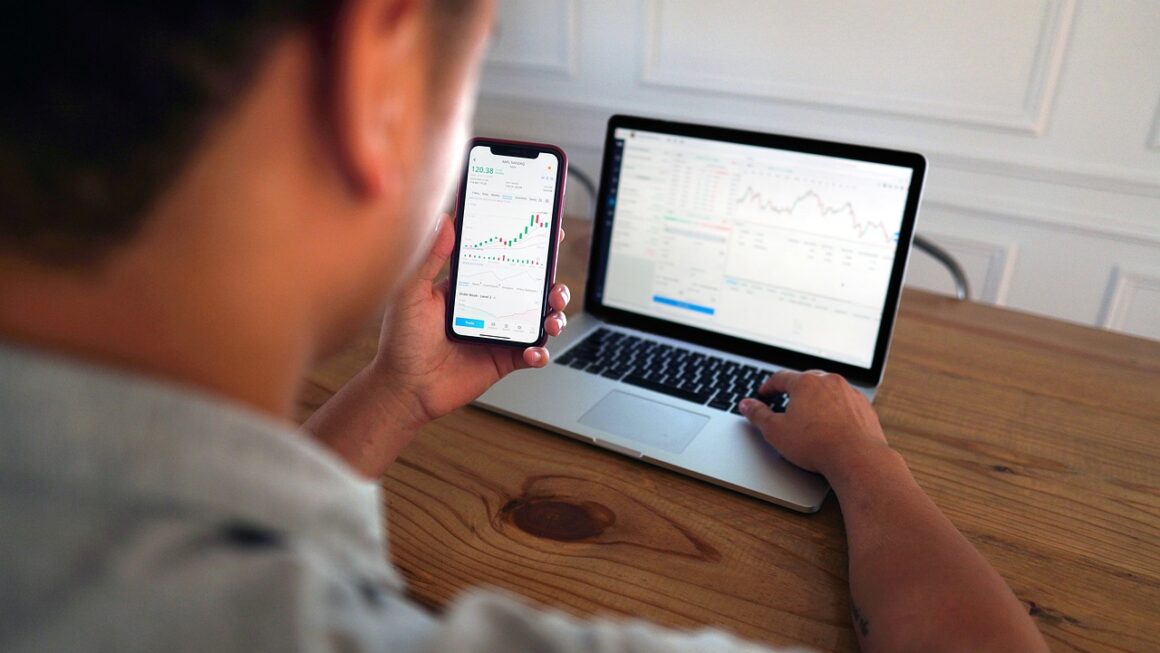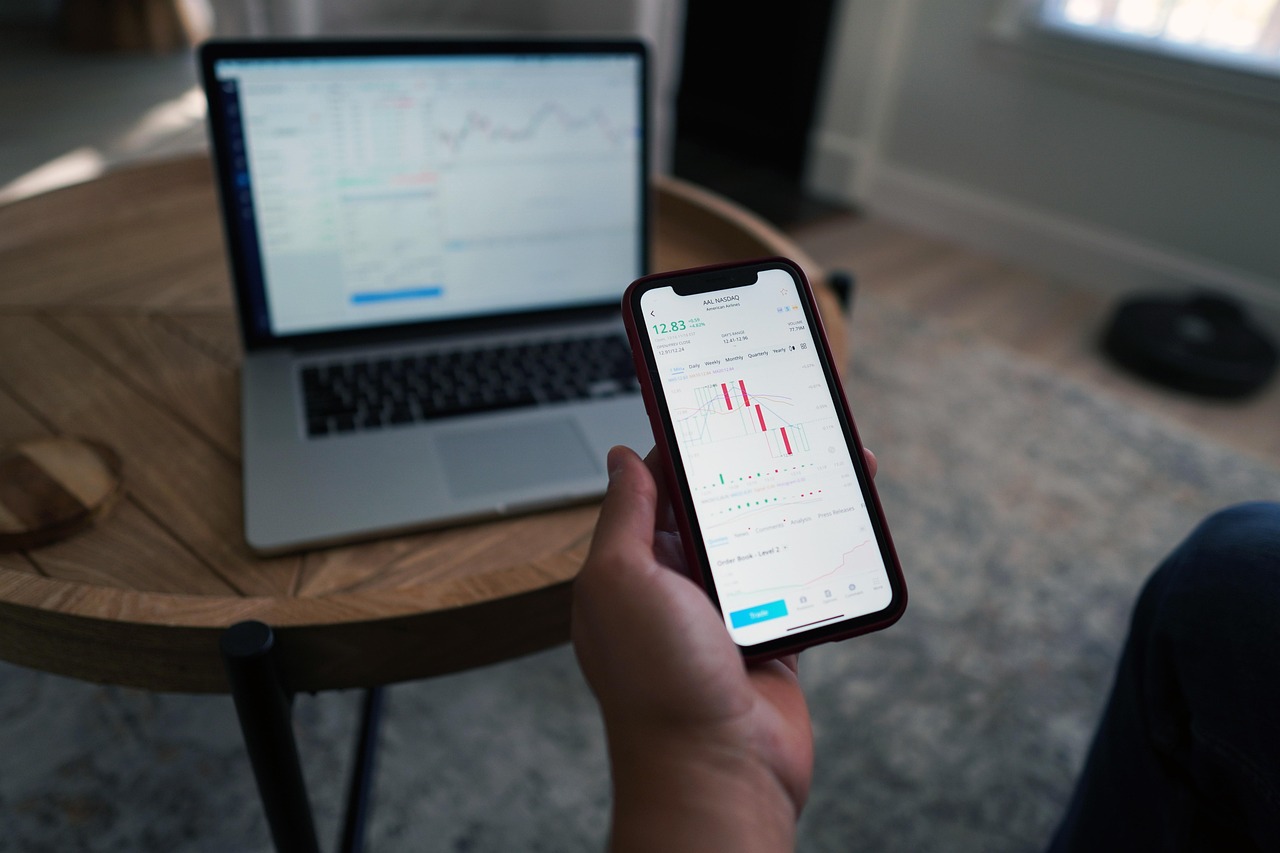
In the dynamic world of financial markets, traders are constantly seeking strategies to maximize their potential returns. While traditional buying and selling offer a straightforward path, an advanced technique known as margin trading allows participants to amplify their exposure and potential profits significantly. This powerful yet complex tool involves borrowing funds to increase your trading capital, opening doors to larger positions than your inherent funds would permit. However, with great power comes great responsibility, and understanding the intricacies of margin trading – from its mechanics to its inherent risks – is paramount for any serious investor looking to leverage their portfolio effectively.
What is Margin Trading? The Basics Explained
Margin trading is a method of trading assets using funds provided by a third party. Essentially, it allows traders to borrow money from a broker to purchase financial instruments, increasing their buying power beyond what their cash balance would normally allow. The capital a trader puts up from their own funds acts as collateral, known as the ‘margin’. This strategy is popular across various markets, including stocks, forex, and cryptocurrencies, offering the potential for amplified gains but also exposing traders to amplified losses.
How Margin Trading Works
At its core, margin trading involves a simple agreement: you deposit a certain percentage of the total trade value as collateral (your margin), and your broker lends you the rest. This borrowed capital enables you to open larger positions. For instance, if you want to buy $10,000 worth of a stock but only have $2,000, a broker might lend you the remaining $8,000, contingent on your $2,000 acting as margin.
- Collateral (Margin): The amount of your own capital you use to open and maintain a leveraged position.
- Borrowed Funds: The capital provided by the broker to boost your trading power.
- Long Position: Betting that an asset’s price will increase. You buy now, hoping to sell higher later.
- Short Position: Betting that an asset’s price will decrease. You sell borrowed assets now, hoping to buy them back cheaper later and return them to the lender.
Practical Example: Initiating a Margin Trade
Imagine you believe Company X’s stock, currently trading at $100 per share, is poised for growth. You have $5,000 in your trading account. With a standard cash account, you could buy 50 shares. However, using margin with a 2:1 leverage (meaning you borrow an amount equal to your own capital), your broker might allow you to use your $5,000 to control $10,000 worth of stock. This means you could buy 100 shares instead of 50. If the stock price increases by 10% to $110, your profit on 100 shares would be $1,000 (excluding interest/fees), compared to $500 on 50 shares without margin. This clearly illustrates the potential to magnify returns.
Actionable Takeaway: Before initiating any margin trade, understand the initial margin requirement and your broker’s terms for borrowing funds. Always start with a clear conviction about the asset’s direction.
The Power of Leverage: Amplifying Potential Returns
Leverage is the core mechanism of margin trading, allowing traders to control a larger position with a relatively small amount of capital. It’s often expressed as a ratio, such as 2:1, 5:1, or even 100:1, indicating how many times your capital is multiplied. For instance, with 10:1 leverage, every $1 of your own capital can control $10 worth of assets.
The primary appeal of leverage is its ability to significantly amplify potential profits. A small positive movement in the asset’s price can translate into a substantial return on your initial margin. This makes margin trading particularly attractive in markets with lower volatility or for traders looking to capitalize on minor price fluctuations.
Calculating Leverage
Leverage is calculated by dividing the total value of the trade by the amount of margin you put up. For example:
- If you want to open a $10,000 position and your broker requires a 10% margin, you would put up $1,000. This is 10:1 leverage ($10,000 / $1,000 = 10).
- If your broker requires a 20% margin for a $10,000 position, you would put up $2,000. This is 5:1 leverage ($10,000 / $2,000 = 5).
Higher leverage means less capital is required to open a large position, but it also proportionally increases both potential gains and losses.
Types of Positions: Long vs. Short
Margin trading expands the opportunities beyond simply buying low and selling high. It also enables short selling, allowing traders to profit from declining prices.
- Long Position (Buying on Margin):
- You borrow funds to purchase an asset, expecting its price to rise.
- If the price goes up, you sell the asset at a profit, repay the borrowed funds plus interest, and keep the difference.
- Example: You buy 100 shares of XYZ stock at $50 using 2:1 leverage ($2,500 of your own, $2,500 borrowed). If the price rises to $55, your position value is $5,500. After repaying $2,500, your profit is $500 (minus interest/fees), doubling your original capital.
- Short Position (Short Selling):
- You borrow an asset (e.g., shares) from your broker and immediately sell them in the market, expecting the price to fall.
- If the price drops, you buy back the same number of shares at the lower price, return them to the broker, and profit from the difference.
- Example: You borrow 100 shares of ABC stock at $100 and sell them, receiving $10,000. If the price drops to $90, you buy back 100 shares for $9,000, return them, and pocket $1,000 (minus interest/fees).
Actionable Takeaway: Understand that leverage is a double-edged sword. While it can amplify profits, it can also accelerate losses. Always calculate your potential risk exposure before entering a leveraged trade, especially when short selling, where theoretical losses are unlimited.
Navigating the Risks: Margin Calls and Liquidation
While the allure of amplified profits is strong, margin trading is inherently riskier than traditional cash trading. The use of borrowed funds means that even small market movements against your position can lead to significant losses, potentially exceeding your initial investment. Understanding the concepts of margin calls and liquidation is crucial for risk management.
Understanding Margin Requirements
To mitigate risk, brokers impose two key margin requirements:
- Initial Margin: The percentage of the total trade value that you must put up from your own funds to open a margin position. This can vary by asset class and broker.
- Maintenance Margin: The minimum amount of equity (your capital + unrealized profit/loss) you must maintain in your margin account relative to the total value of your open positions. If your account equity falls below this level due to unfavorable price movements, a margin call will be issued.
What is a Margin Call?
A margin call occurs when the value of the assets in your margin account falls below the maintenance margin requirement. Your broker will then demand that you deposit additional funds or securities to bring your account back up to the maintenance margin level. If you fail to meet a margin call within the specified timeframe, your broker has the right to forcefully close some or all of your positions to cover the deficit, regardless of whether you want to hold them or not. This is known as liquidation.
Practical Example: Margin Call Scenario
You open a $10,000 long position on a stock with $2,000 of your own money (5:1 leverage). Your initial margin is 20%. Let’s say the maintenance margin is 15%. If the stock’s value drops, and your equity (your original $2,000 minus unrealized losses) falls below $1,500 (15% of $10,000), your broker will issue a margin call. You’ll need to deposit funds to bring your equity back up, usually to the initial margin level or more.
Protecting Your Capital: Risk Management Strategies
Effective risk management is not optional in margin trading; it’s essential for survival. Here are key strategies:
- Set Stop-Loss Orders: A stop-loss order automatically closes your position if the asset’s price reaches a predetermined level, limiting your potential losses. This is perhaps the most critical tool for managing downside risk.
- Use Conservative Leverage: Avoid using the maximum leverage offered, especially as a beginner. Start with lower leverage ratios (e.g., 2:1 or 3:1) to gain experience without undue risk.
- Diversify Your Portfolio: Don’t put all your margin trades into a single asset or market. Diversification can help spread risk.
- Position Sizing: Never risk more than a small percentage of your total trading capital on any single trade. A common rule of thumb is 1-2%.
- Monitor Your Positions Closely: Actively track the performance of your margin trades and be prepared to take action if market conditions turn unfavorable.
- Understand Interest Rates and Fees: Remember that borrowed funds accrue interest, and there might be other fees associated with margin trading. These costs eat into your profits, especially on long-held positions.
Actionable Takeaway: Always trade with a clearly defined stop-loss strategy. Never risk capital you cannot afford to lose, and understand that margin trading can lead to losses exceeding your initial deposit if not managed properly.
Practical Applications: Where Margin Trading Thrives
Margin trading is not confined to a single market; its principles are applied across various financial instruments, each with its unique characteristics, risks, and opportunities. Understanding these differences is key to choosing where to apply this strategy.
Margin Trading in Stocks
Stock margin trading is one of the most common applications. Investors can borrow funds from their brokerage firm to buy more shares than they could with their cash balance. This is highly regulated by bodies like the Securities and Exchange Commission (SEC) and FINRA in the U.S., which set minimum margin requirements and rules.
- Regulation: Generally stricter, with specific initial and maintenance margin requirements. For instance, Regulation T in the U.S. currently requires a 50% initial margin for most stock purchases.
- Volatility: Varies greatly depending on the stock. Large-cap, established companies tend to be less volatile than small-cap or growth stocks.
- Interest: Brokers charge interest on the borrowed funds, which varies based on market rates and the amount borrowed.
Example: You are bullish on a tech stock at $200, but only have $5,000. With a 50% initial margin, you can borrow another $5,000 to buy $10,000 worth of stock (50 shares instead of 25). If the stock goes to $220, your profit is $1,000 before interest, significantly more than the $500 you’d make without margin.
Margin Trading in Cryptocurrencies
Cryptocurrency margin trading has exploded in popularity due to the inherent volatility of digital assets and the availability of very high leverage on many crypto exchanges. While it offers immense profit potential, it also comes with significantly higher risk.
- Leverage: Often much higher than traditional markets, with some platforms offering up to 100x or even 125x leverage. This means a small price movement can lead to a quick liquidation.
- Volatility: Cryptocurrencies are notorious for their rapid and drastic price swings, making margin trading incredibly risky but also potentially very rewarding.
- Regulation: Less regulated compared to traditional stock markets, leading to varying levels of consumer protection across different exchanges and jurisdictions.
- Funding Rates: Instead of simple interest, crypto margin traders often pay or receive ‘funding rates’ (especially in perpetual futures), which can fluctuate significantly based on market demand for long or short positions.
Example: You believe Bitcoin, currently at $30,000, will surge. With $1,000 and 20x leverage, you can open a $20,000 position. If Bitcoin rises by just 5% to $31,500, your $20,000 position is now worth $21,000, giving you a $1,000 profit (minus fees) – a 100% return on your initial $1,000! However, a 5% drop to $28,500 would wipe out your entire $1,000 margin and lead to liquidation.
Actionable Takeaway: Match your margin trading venue to your risk tolerance and market knowledge. Cryptocurrencies offer higher leverage and potential returns but demand extreme caution and robust risk management due to their volatility and less regulated environment.
Is Margin Trading Right For You? Key Considerations
Margin trading is a powerful tool, but it’s not suitable for everyone. Before venturing into this advanced trading strategy, it’s crucial to assess your financial situation, risk tolerance, and trading expertise. It requires a disciplined approach, continuous learning, and a deep understanding of market dynamics.
Choosing the Right Broker
The success and safety of your margin trading experience heavily depend on the broker you choose. Here are critical factors to consider:
- Regulation and Reputation: Ensure the broker is regulated by reputable financial authorities (e.g., FINRA for stocks, FCA in the UK, ASIC in Australia). A well-established broker with a good track record offers more security.
- Margin Requirements and Leverage Offered: Compare initial and maintenance margin percentages across brokers. Also, check the maximum leverage they offer for the assets you wish to trade. Lower leverage can be safer for beginners.
- Interest Rates and Fees: Understand all costs involved, including interest on borrowed funds, commissions, withdrawal fees, and any inactivity charges. These can significantly impact your profitability.
- Trading Platform and Tools: A user-friendly, robust trading platform with advanced charting tools, risk management features (like easy stop-loss order placement), and real-time data is invaluable.
- Customer Support: Responsive and knowledgeable customer service is essential, especially when dealing with urgent margin call situations.
Building a Solid Trading Plan
Successful margin traders don’t rely on luck; they adhere to a well-defined plan. Your plan should address:
- Financial Goals: What do you hope to achieve with margin trading? Are your goals realistic given the risks?
- Risk Tolerance: Honestly assess how much capital you are truly prepared to lose. This will dictate your leverage levels and position sizes.
- Market Analysis Strategy: How will you identify trading opportunities? Will you use technical analysis, fundamental analysis, or a combination?
- Entry and Exit Points: Define clear criteria for when to enter a trade and, crucially, when to exit – both for profit-taking and for cutting losses (your stop-loss).
- Capital Allocation: Determine how much of your total capital you will allocate to margin trades and how much to each individual trade. Never risk your entire margin account on one position.
- Emotional Discipline: Margin trading can be highly stressful. Stick to your plan and avoid impulsive decisions driven by fear or greed.
Actionable Takeaway: Treat margin trading as a serious endeavor. Thoroughly research your broker and commit to developing and sticking to a robust trading plan that prioritizes risk management above all else. Start small, learn continuously, and only increase your exposure as your experience and confidence grow.
Conclusion
Margin trading is an advanced and powerful strategy that, when used judiciously, can significantly enhance a trader’s capital efficiency and potential returns across various financial markets. By borrowing funds, traders can amplify their buying or selling power, opening doors to larger positions and diversified strategies like short selling. However, the allure of amplified gains comes hand-in-hand with amplified risks. The concepts of leverage, margin calls, and liquidation are critical to understand, as adverse market movements can lead to rapid and substantial losses, potentially exceeding your initial investment.
Ultimately, successful margin trading hinges on meticulous risk management, a clear understanding of market dynamics, and unwavering discipline. By choosing a reputable broker, implementing robust risk mitigation strategies like stop-loss orders, and adhering to a well-defined trading plan, traders can navigate the complexities of margin trading more effectively. It is not a path for the faint of heart or the unprepared, but for those who commit to continuous learning and prudent execution, margin trading can be a valuable tool in their financial arsenal. Always remember to trade responsibly and never risk more than you can afford to lose.