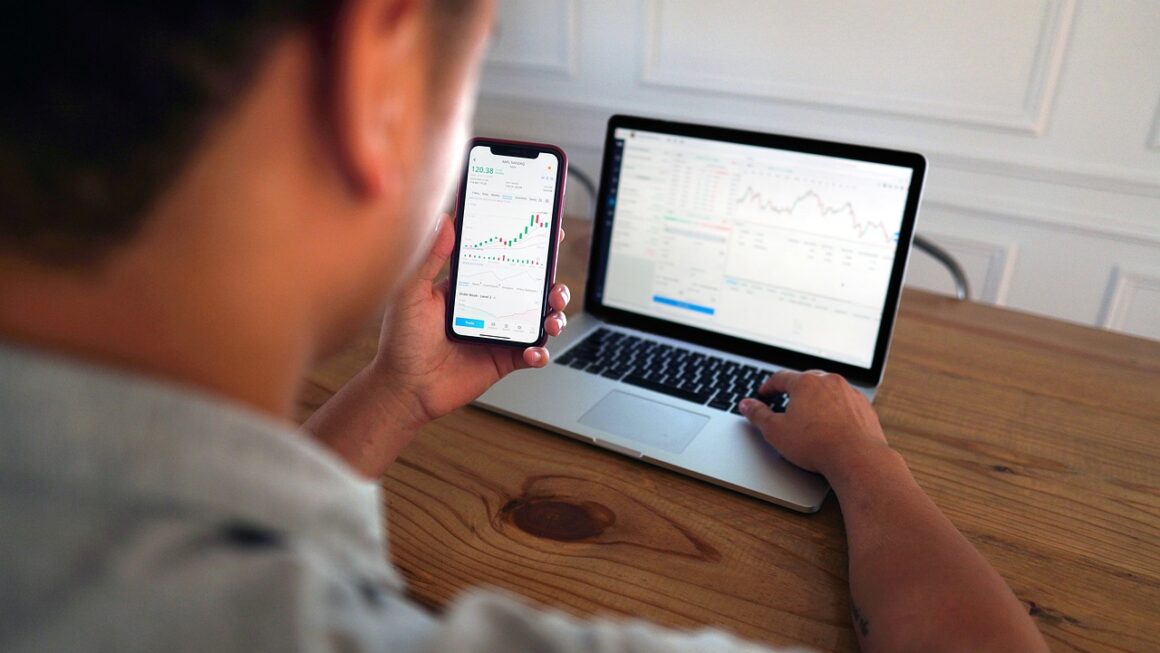
In the dynamic world of financial markets, few concepts are as frequently discussed, yet often misunderstood, as volatility. It’s the silent force behind every market swing, every dramatic headline, and every investor’s sleepless night or exhilarating gain. Often perceived solely as a harbinger of risk, volatility is, in fact, a neutral measure of price fluctuation – a double-edged sword that presents both challenges and unparalleled opportunities. Understanding its nuances is not just crucial for managing risk, but also for unlocking potential returns. This comprehensive guide will demystify volatility, exploring its causes, implications, and practical strategies to navigate and even leverage it for your financial advantage.
Understanding Volatility: More Than Just Risk
Volatility, at its core, refers to the degree of variation of a trading price series over time. It quantifies how much an asset’s price has deviated from its average over a given period. While often equated with “risk,” it simply describes the speed and magnitude of price changes, regardless of direction. A highly volatile asset can see large price increases just as easily as large decreases.
What is Volatility?
- Definition: The rate at which the price of a security, market index, or other financial instrument increases or decreases over a given period. It’s a statistical measure, typically calculated as the standard deviation of returns.
- Not Just Negative: High volatility means prices are changing rapidly. This can be downward (bear market) or upward (bull market). For active traders, volatility can be a source of profit regardless of direction.
- Key Metrics:
- Standard Deviation: The most common statistical measure, indicating how widely values are dispersed from the average value.
- Beta: Measures a stock’s volatility in relation to the overall market. A beta of 1 means the stock moves with the market; a beta greater than 1 means it’s more volatile.
- VIX (Volatility Index): Often called the “fear index,” the VIX measures the market’s expectation of future volatility based on S&P 500 index options prices. A high VIX indicates market uncertainty and fear.
Types of Volatility
Understanding the different types helps in interpreting market signals and making informed decisions.
- Historical (Realized) Volatility:
- Calculated from past market data, specifically price movements over a specified period.
- Practical Example: Analyzing a stock’s daily closing prices over the last 90 days to determine its average daily price swing. This tells you what has happened.
- Usefulness: Provides a factual record of how an asset has behaved, helping investors assess past risk and potential future patterns.
- Implied (Future) Volatility:
- Derived from the prices of options contracts. It reflects the market’s expectation of future volatility for an underlying asset.
- Practical Example: If options on Company X are trading at very high premiums, it suggests traders expect significant price swings in Company X stock in the near future, indicating high implied volatility. This is what the market expects will happen.
- Usefulness: A forward-looking indicator, crucial for options traders and for gauging overall market sentiment. A spike in implied volatility often precedes major market movements or economic announcements.
The Driving Forces Behind Market Swings
Volatility doesn’t just appear out of nowhere; it’s a reaction to a complex interplay of economic, political, and psychological factors. Identifying these drivers can help investors anticipate potential shifts and understand market behavior.
Economic Indicators and Central Bank Actions
Macroeconomic data releases and monetary policy shifts are powerful catalysts for market volatility.
- Inflation and Interest Rates: Unexpected changes in inflation data or central bank interest rate decisions (e.g., by the Federal Reserve) can drastically alter investor sentiment and company valuations. Higher rates often increase borrowing costs, impacting corporate profits and consumer spending.
- GDP Reports: Gross Domestic Product (GDP) growth figures provide insights into the health of an economy. Surprising growth or contraction can trigger significant market reactions.
- Employment Figures: Reports like the Non-Farm Payroll (NFP) in the U.S. can move markets, as they reflect consumer spending power and economic robustness. Strong employment typically signals economic health, but can also fuel inflation concerns.
- Trade Balances and Commodity Prices: Significant shifts in global trade flows or commodity prices (oil, metals) can impact corporate earnings and national economies, leading to market volatility.
Geopolitical Events and Global Instability
Events on the international stage often have far-reaching financial implications.
- Wars and Conflicts: Geopolitical tensions, military conflicts, or major terrorist incidents can create immense uncertainty, disrupting supply chains, impacting energy prices, and sending shockwaves through global markets.
- Trade Disputes and Sanctions: Tariffs, trade wars, or international sanctions can negatively affect multinational corporations and national economies, leading to market corrections.
- Political Instability: Elections, government crises, or policy uncertainties in major economies can deter investment and increase market unease. For instance, Brexit negotiations created prolonged volatility for the British Pound and UK equities.
- Natural Disasters and Pandemics: Major natural disasters or global health crises (like COVID-19) can cause widespread economic disruption, impacting industries, supply chains, and consumer behavior, leading to heightened market volatility.
Company-Specific News and Market Sentiment
Micro-level events and collective investor psychology also play a significant role.
- Earnings Reports: Quarterly or annual earnings announcements are critical. If a company’s revenue or profit figures miss or exceed expectations, its stock price can experience sharp movements. Forward-looking guidance is also key.
- Product Launches and Innovation: The success or failure of a new product, or breakthrough innovations, can significantly impact a company’s stock price and the sector it operates in.
- Mergers & Acquisitions (M&A): Announcements of M&A deals often lead to volatility for the acquiring and target companies, as investors react to the potential synergies, debt, and market consolidation.
- Market Sentiment and Psychology: Fear and greed are powerful emotions that can drive irrational market behavior. Herd mentality, where investors follow the crowd, can exacerbate market movements. The rise of social media also means news and rumors spread faster, influencing quick price reactions.
Navigating Volatility: Strategies for Investors
While volatility can be unsettling, investors equipped with robust strategies can protect their portfolios and even identify opportunities. The key is to have a plan and stick to it.
Diversification: Your First Line of Defense
Spreading your investments across different asset classes and geographies is a fundamental risk management tool.
- Asset Classes: Don’t put all your money in stocks. Include bonds, real estate, commodities, or even alternative investments. Bonds often perform well when stocks are down, providing a counterbalance.
- Geographic and Sector Diversification: Invest in companies across different countries and industries. A downturn in one region or sector (e.g., tech stocks) may not affect others (e.g., healthcare or consumer staples) as severely.
- Practical Example: Instead of investing solely in U.S. large-cap tech stocks, consider adding international equities, government bonds, and a real estate investment trust (REIT) to your portfolio. When tech stocks are volatile, your bonds might provide stability, and international markets might be performing differently.
Dollar-Cost Averaging (DCA): A Disciplined Approach
DCA involves investing a fixed amount of money at regular intervals, regardless of the asset’s price.
- How it Works: You invest, for example, $500 into a specific mutual fund or ETF every month. When prices are high, your fixed amount buys fewer shares; when prices are low (during volatile periods), it buys more shares.
- Benefits:
- Reduces the risk of buying at a market peak.
- Automates investing and removes emotional decision-making.
- Over time, it can lead to a lower average cost per share.
- Actionable Takeaway: Set up automatic investments into your preferred assets. This systematic approach leverages volatility by ensuring you buy more during market dips.
Hedging Strategies: Reducing Downside Risk
More advanced investors can use hedging to mitigate potential losses during volatile periods.
- Options Contracts:
- Buying Puts: Purchasing a put option gives you the right to sell a stock at a specified price (strike price) before a certain date. It acts like an insurance policy, protecting against significant price drops.
- Selling Calls: (See “Volatility as an Opportunity” for covered calls).
- Inverse ETFs: These exchange-traded funds are designed to perform inversely to a specific index or sector. If the S&P 500 drops, an inverse S&P 500 ETF is designed to go up, offering a short-term hedge.
- Practical Example: An investor holding a significant position in a tech stock might buy put options on that stock. If the stock price plummets due to market volatility, the value of the put options will increase, offsetting some of the losses from the stock holding.
Maintain a Long-Term Perspective and Rebalance
Emotional reactions are detrimental during volatile times. Focus on your long-term goals.
- Avoid Panic Selling: Market downturns are often temporary. Selling out of fear can lock in losses and cause you to miss the subsequent recovery. Remind yourself of your original investment thesis.
- Focus on Fundamentals: Volatility often creates discrepancies between a company’s intrinsic value and its market price. Strong, fundamentally sound companies often rebound once market stability returns.
- Portfolio Rebalancing: Periodically review and adjust your portfolio to maintain your desired asset allocation.
- When some assets perform exceptionally well, they may grow to represent a larger portion of your portfolio than intended. Sell some of these “winners.”
- When other assets underperform due to volatility, they may shrink below their target allocation. Buy more of these “losers” (assuming their fundamentals are still strong). This embodies the “sell high, buy low” principle.
Volatility as an Opportunity: The Savvy Investor’s Edge
While often feared, volatility can be a friend to the prepared and patient investor. Periods of market turbulence can present unique opportunities to acquire quality assets at discounted prices or to generate income.
Buying the Dips: Patience and Conviction
Market downturns can be ideal times to invest in high-quality assets at reduced prices.
- Identify Fundamentally Strong Companies: Focus on companies with solid balance sheets, consistent earnings, competitive advantages, and good management. These are the companies most likely to recover and thrive post-volatility.
- Average Down Effectively: If you already own shares of a good company whose price has fallen due to market-wide volatility (not company-specific issues), buying more shares at a lower price reduces your average cost basis.
- Practical Example: During the market downturn of early 2020 due to COVID-19, many blue-chip companies saw their stock prices drop significantly. Investors who had conviction in these companies and bought shares during the dip were able to realize substantial gains as the market recovered.
Selling Covered Calls: Generating Income in Range-Bound Markets
For investors who own shares of stock and are willing to potentially sell them at a certain price, covered calls offer an income-generating strategy.
- How it Works: You own at least 100 shares of a stock. You then sell (write) a call option against those shares. You receive a premium (income) for selling the call. If the stock price rises above the strike price by the expiration date, your shares will be “called away” (sold) at the strike price. If it stays below, you keep the shares and the premium.
- Benefits:
- Generates regular income from your existing stock holdings.
- Provides a small buffer against moderate price declines (you keep the premium even if the stock drops slightly).
- Actionable Takeaway: Use this strategy on stocks you are comfortable owning long-term but wouldn’t mind selling if they hit a certain price target, especially in markets you expect to be range-bound or have modest upside.
Options Trading for Specific Volatility Plays (Advanced)
Sophisticated investors can use advanced options strategies to profit directly from expected increases or decreases in volatility.
- Straddles: Buying both a call and a put option with the same strike price and expiration date. This strategy profits if the underlying asset makes a very large move (up or down) beyond the combined cost of the options. Useful when expecting a significant price swing but unsure of the direction (e.g., around an earnings announcement).
- Strangles: Similar to straddles, but buying out-of-the-money calls and puts. This makes them cheaper but requires an even larger price movement to profit.
- Actionable Takeaway: These strategies require a deep understanding of options mechanics, risk management, and market analysis. They are not suitable for beginners and carry significant risk.
Value Investing in Turbulent Times
Periods of heightened volatility often create opportunities for value investors to acquire assets below their intrinsic worth.
- Benjamin Graham’s Principles: The father of value investing advocated for buying stocks when their market price is significantly below their fundamental value, creating a “margin of safety.” Volatile markets often provide these opportunities as fear drives prices down indiscriminately.
- Finding Undervalued Gems: Research companies that are temporarily out of favor but possess strong fundamentals, good management, and clear long-term growth prospects.
- Practical Example: During a sector-wide downturn (e.g., tech sell-off), a value investor might identify a well-established, profitable tech company with strong cash flow whose stock price has been unfairly punished alongside less robust competitors.
Conclusion
Volatility is an inescapable and inherent characteristic of financial markets. It’s neither inherently good nor bad, but rather a measure of change and an indicator of the underlying forces at play. For the uninformed, it can be a source of anxiety and poor decision-making. However, for the well-informed and disciplined investor, volatility presents a landscape of opportunities.
By understanding its drivers, implementing robust risk management strategies like diversification and dollar-cost averaging, and maintaining a long-term perspective, you can navigate turbulent waters with confidence. Furthermore, savvy investors can learn to leverage volatility through strategies such as buying the dip in quality assets, selling covered calls for income, or employing advanced options techniques. Embrace volatility not as a threat, but as an integral part of the investment journey that, with knowledge and strategy, can be managed and even turned into a powerful ally for achieving your financial goals.