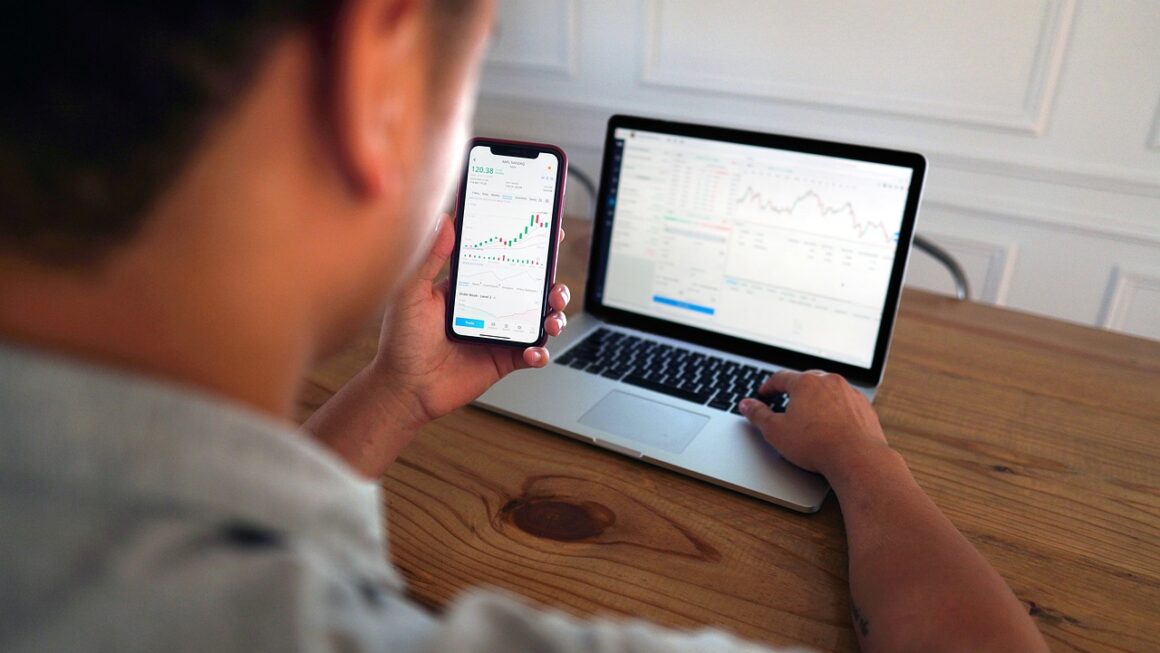
In the dynamic world of finance, few concepts evoke as much discussion and apprehension as volatility. Often seen as a harbinger of risk and uncertainty, volatility is, in essence, the degree of variation of a trading price series over time. It’s the rapid ups and downs, the sudden surges and dips that characterize financial markets, from stocks and bonds to commodities and cryptocurrencies. While it can certainly make investors uneasy, understanding volatility isn’t just about preparing for the worst; it’s about recognizing the fundamental rhythm of markets and, crucially, identifying the potential opportunities it presents for astute investors.
Understanding Volatility: More Than Just Risk
Volatility is an inherent feature of financial markets, representing the speed and magnitude of price changes. While often equated with risk, it’s more accurately a measure of price fluctuation – a key indicator for both risk assessment and potential return.
What is Volatility and How is it Measured?
At its core, volatility describes how much an asset’s price deviates from its average over a given period. Higher volatility indicates larger and more rapid price swings, while lower volatility suggests relative stability.
- Standard Deviation: The most common statistical measure, it quantifies the dispersion of a set of data points around their mean. In finance, it measures how much an asset’s returns deviate from its average returns.
- Beta: Measures a stock’s volatility in relation to the overall market. A beta of 1 means the stock moves with the market; a beta greater than 1 means it’s more volatile than the market.
- VIX (Volatility Index): Often called the “fear gauge,” the VIX measures the market’s expectation of future volatility based on S&P 500 index options. A high VIX indicates increased market uncertainty and expected turbulence.
Practical Example: If Stock A fluctuates between $95 and $105 over a month, while Stock B fluctuates between $80 and $120, Stock B is significantly more volatile, even if both end the month at $100.
Types of Volatility: Historical vs. Implied
Understanding the distinction between these two types is crucial for making informed decisions.
- Historical Volatility (HV): Calculated from past price movements. It tells us how much an asset’s price has fluctuated in the past. It’s backward-looking.
- Implied Volatility (IV): Derived from the prices of options contracts. It reflects the market’s expectation of future price movements. It’s forward-looking and influenced by supply, demand, and market sentiment.
Actionable Takeaway: Don’t just look at an asset’s current price. Always consider its historical volatility for context and its implied volatility for future expectations, especially when trading options or derivatives.
The Drivers of Market Volatility
Market volatility is a complex phenomenon influenced by a myriad of interconnected factors, both economic and psychological. Recognizing these drivers helps investors anticipate potential shifts and understand the underlying dynamics of price movements.
Economic Indicators and Policy Shifts
Macroeconomic data and central bank actions frequently trigger market reactions.
- Interest Rates: Changes in interest rates by central banks (e.g., the Federal Reserve) impact borrowing costs, corporate profits, and investment appeal, often leading to market swings.
- Inflation Data: Higher-than-expected inflation can erode purchasing power and corporate earnings, spurring volatility as investors adjust expectations for future prices and monetary policy.
- GDP Growth: Strong or weak Gross Domestic Product figures can signal economic expansion or contraction, influencing investor confidence and market direction.
- Unemployment Rates: Jobs reports are closely watched; significant changes can indicate shifts in economic health and consumer spending.
Practical Example: A surprise announcement of a rate hike by the Federal Reserve can immediately cause bond prices to fall (as new bonds offer higher yields) and stock markets to dip due to concerns about increased borrowing costs for companies.
Geopolitical Events and Global Shocks
Events on the global stage, often unpredictable, can send ripples through financial markets.
- Wars and Conflicts: Regional or global conflicts can disrupt supply chains, impact commodity prices (especially oil), and create widespread uncertainty.
- Trade Disputes: Tariffs and trade wars between major economies can hurt global growth prospects and impact specific industries.
- Elections and Political Instability: Unexpected election outcomes or political turmoil in key countries can lead to capital flight and market jitters.
- Natural Disasters and Pandemics: Events like hurricanes, earthquakes, or global health crises (e.g., COVID-19) can cause significant economic disruption and market panic.
Actionable Takeaway: Stay informed about global news. While predicting these events is impossible, understanding their potential impact can help you position your portfolio more defensively when tensions rise.
Company-Specific News and Sectoral Shifts
Beyond macro factors, individual company performance and industry trends also contribute to volatility.
- Earnings Reports: Quarterly earnings announcements that beat or miss expectations can cause dramatic single-stock price movements.
- Product Launches & Innovation: Successful (or failed) product launches, technological breakthroughs, or competitive threats can significantly alter a company’s prospects.
- Mergers & Acquisitions: Announcements of M&A deals can cause the target company’s stock to surge and the acquirer’s to fluctuate, depending on the terms and perceived value.
Investor Sentiment and Psychological Factors
Human emotions play a significant role in market movements, often amplifying volatility.
- Fear and Greed: These powerful emotions drive herd behavior. Fear can lead to panic selling, while greed can fuel speculative bubbles.
- Confirmation Bias: Investors may seek out information that confirms their existing beliefs, ignoring contradictory evidence, which can lead to overconfidence or delayed reactions.
- Herding Behavior: The tendency of investors to follow the actions of a larger group, even if those actions contradict their own analysis, can accelerate market trends.
Actionable Takeaway: Develop a disciplined investment strategy that minimizes emotional decision-making. Stick to your plan, especially during periods of high volatility, to avoid irrational buying or selling.
Navigating Volatility: Strategies for Investors
Volatility is a constant in financial markets, not an exception. Smart investors don’t shy away from it; they prepare for it. Implementing robust strategies can help mitigate risks and even uncover opportunities during turbulent times.
Diversification and Asset Allocation
The cornerstone of prudent investing, especially in volatile environments, is not putting all your eggs in one basket.
- Across Asset Classes: Allocate investments across different asset classes like stocks, bonds, real estate, and commodities. These often have varying correlations, meaning they don’t all move in the same direction at the same time.
- Within Asset Classes: Diversify within stocks across different industries (e.g., tech, healthcare, consumer staples), market capitalizations (large-cap, mid-cap, small-cap), and geographies.
- Rebalancing: Periodically adjust your portfolio back to your target asset allocation. If stocks have performed exceptionally well, you might sell some to buy more bonds, maintaining your desired risk level.
Practical Example: During the 2008 financial crisis, a diversified portfolio with a significant bond allocation would have performed better than one solely invested in equities, as bonds often act as a safe haven.
Dollar-Cost Averaging (DCA)
A simple yet powerful strategy that takes the emotion out of buying decisions.
- Regular Investments: Invest a fixed amount of money at regular intervals (e.g., monthly) regardless of market conditions.
- Averages Out Purchase Price: When prices are high, your fixed amount buys fewer shares; when prices are low, it buys more shares. Over time, this strategy helps to average out your purchase price.
- Reduces Risk of Market Timing: DCA eliminates the need to try and predict market bottoms or tops, which is notoriously difficult.
Actionable Takeaway: For long-term investors, particularly those contributing to retirement accounts, dollar-cost averaging is an excellent way to harness volatility by consistently acquiring assets, especially during market downturns.
Embracing a Long-Term Perspective
One of the most effective mental strategies for enduring volatility is adopting a long-term view.
- Time Horizon: Understand that short-term market fluctuations are normal. Over decades, equity markets have historically trended upwards, recovering from numerous downturns.
- Focus on Fundamentals: Instead of daily price movements, concentrate on the underlying health and growth prospects of your investments.
- Avoid Panic Selling: Selling assets during a downturn locks in losses and prevents you from participating in the eventual recovery.
Practical Example: The S&P 500 has experienced numerous corrections and bear markets throughout its history, but a buy-and-hold investor over a 20+ year period would have seen substantial returns, far outweighing any short-term dips.
Hedging Strategies
For more sophisticated investors, hedging can directly mitigate volatility risk.
- Options and Futures: These derivatives can be used to protect existing positions (e.g., buying put options to hedge against a stock price decline) or to profit from anticipated market movements.
- Inverse ETFs: These exchange-traded funds aim to deliver the inverse return of a specific index or sector, offering a way to profit when markets fall.
Actionable Takeaway: While complex, understanding basic hedging concepts can be valuable. For most retail investors, diversification and a long-term perspective are sufficient, but professional advice may explore these advanced tools.
Volatility as Opportunity: Turning Swings into Gains
While many view volatility with trepidation, experienced investors and traders often see it as a fertile ground for generating returns. The key lies in understanding that price swings create discrepancies between intrinsic value and market price, which can be exploited.
Buying Low During Market Dips
The adage “buy low, sell high” is easier said than done, but volatility provides the “low” opportunities.
- Identify Quality Assets: Focus on fundamentally strong companies or assets that are temporarily undervalued due to market-wide panic or sector-specific headwinds.
- Disciplined Entry Points: Use market downturns as opportunities to accumulate positions at discounted prices, rather than being swept up in fear.
- Average Down: If you believe in an asset’s long-term prospects, buying more shares when its price drops further can lower your overall average cost per share.
Practical Example: During the COVID-19 market crash in March 2020, many high-quality tech companies saw significant, albeit temporary, price reductions. Investors who bought into these dips saw substantial gains as markets recovered.
Utilizing Volatility-Based Products
Specific financial instruments are designed to capitalize on, or hedge against, volatility itself.
- Options Trading: Options contracts derive their value partly from implied volatility. Traders can buy or sell calls and puts to profit from anticipated increases or decreases in volatility, or specific price movements.
- Volatility ETFs/ETNs: Some exchange-traded products track volatility indices (like the VIX) or provide leveraged exposure to expected market swings. These are often complex and carry significant risks.
Actionable Takeaway: Engaging with volatility-based products requires significant knowledge and experience. For advanced traders, they offer tools to profit from market movements, but for beginners, they should be approached with extreme caution or avoided entirely.
Identifying Undervalued Assets
Volatility can obscure the true value of an asset, presenting opportunities for value investors.
- Fundamental Analysis: Dig deep into a company’s financials, management, competitive landscape, and future growth prospects. Determine its intrinsic value independent of market sentiment.
- Market Disconnects: Periods of high volatility often lead to irrational selling, pushing stock prices below their true worth. Identifying these disconnects is key.
Practical Example: A solid, profitable company might see its stock price tumble by 30% during a market correction, even if its business fundamentals remain strong. This presents an opportunity for investors to acquire a piece of a good business at a significant discount.
Actionable Takeaway: Develop strong analytical skills. Learn to distinguish between temporary market noise and genuine deterioration in an asset’s fundamentals. Volatility rewards those who do their homework.
Risk Management in a Volatile Environment
Effective risk management is paramount when dealing with volatility. It’s about protecting your capital, minimizing potential losses, and ensuring your investment strategy remains robust through turbulent times.
Setting Clear Goals and Risk Tolerance
Before making any investment, understand what you aim to achieve and how much risk you’re comfortable taking.
- Investment Horizon: Define whether your goals are short-term (less than 3 years), medium-term (3-10 years), or long-term (10+ years), as this influences appropriate asset allocation.
- Financial Goals: Are you saving for retirement, a down payment, or education? Your specific goals dictate the level of risk you can afford.
- Personal Risk Assessment: Honestly evaluate your emotional capacity to handle market downturns. Don’t take on more risk than you can comfortably stomach.
Practical Example: A young investor saving for retirement in 30 years might have a higher risk tolerance for equity volatility than someone nearing retirement in 5 years, who might prioritize capital preservation.
Utilizing Stop-Loss Orders
A simple yet effective tool to limit potential losses on individual positions.
- Automatic Selling: A stop-loss order instructs your broker to sell an asset if its price falls to a predetermined level.
- Preserving Capital: This helps prevent catastrophic losses if a stock or market takes an unexpected nosedive.
- Trailing Stop-Loss: A more dynamic option that adjusts the stop price as the asset’s price increases, allowing you to protect profits while limiting downside.
Actionable Takeaway: For individual stock holdings, especially in high-volatility sectors, consider implementing stop-loss orders. Just be mindful of “stop hunts” or brief, sharp drops that trigger stops before recovery.
Maintaining Sufficient Cash Reserves
Liquidity is your friend during times of uncertainty.
- Emergency Fund: Always have a separate emergency fund (3-6 months of living expenses) in an easily accessible, low-risk account. This prevents you from being forced to sell investments during a downturn to cover unexpected costs.
- Dry Powder for Opportunities: Keeping some cash aside allows you to capitalize on buying opportunities when volatile markets offer discounted assets.
Practical Example: During a market crash, having cash readily available means you can invest in quality companies at lower prices, rather than being a forced seller or missing out on the recovery.
Regular Portfolio Reviews and Stress Testing
Proactively assess your portfolio’s resilience.
- Periodic Check-ups: Review your portfolio at least annually (or more frequently if market conditions are extreme) to ensure it aligns with your goals and risk tolerance.
- Stress Test Your Portfolio: Imagine how your portfolio would perform under various adverse scenarios (e.g., a 20% market drop, a specific sector downturn). This helps identify vulnerabilities.
Actionable Takeaway: Don’t just set and forget. A living portfolio requires regular attention and adjustments to navigate evolving market conditions and personal circumstances. Seeking advice from a qualified financial advisor can provide objective insights and help you manage risk effectively.
Conclusion
Volatility is an inescapable and fundamental characteristic of financial markets. Rather than fearing it, successful investors learn to understand, anticipate, and strategically navigate its ebb and flow. From recognizing its underlying drivers to deploying robust diversification and dollar-cost averaging techniques, there are numerous ways to manage the risks and even capitalize on the opportunities that market swings present.
By embracing a long-term perspective, maintaining discipline, and prioritizing sound risk management, investors can transform volatility from a source of anxiety into a potential catalyst for growth. The key is not to eliminate volatility – an impossible task – but to become a more informed, resilient, and adaptive participant in the ever-changing landscape of global finance.